
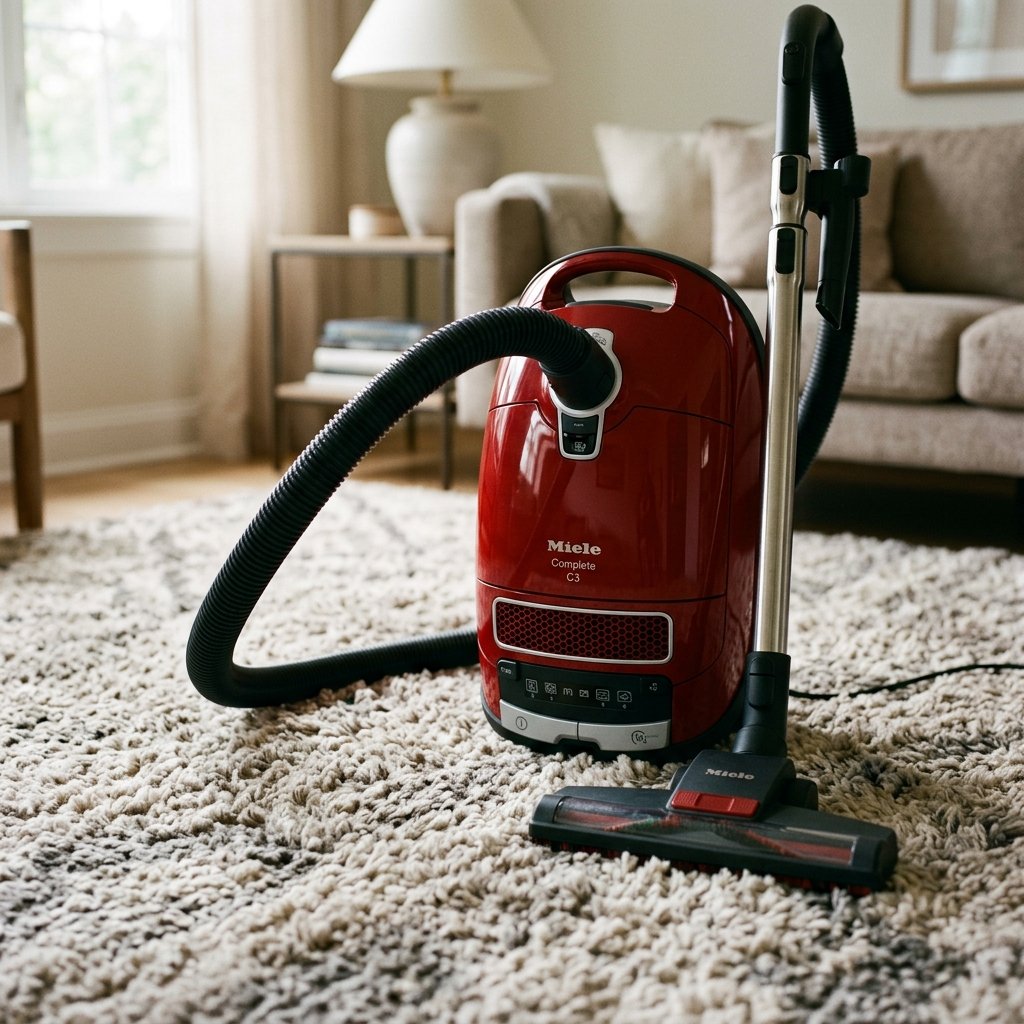
Miele and Dyson both sit at the premium end of the Australian vacuum market, but they take genuinely different design philosophies — Miele’s German engineering emphasis on bagged systems and longevity versus Dyson’s bagless, feature-forward cordless focus.
Quick Answer
Miele is generally the stronger choice for allergy sufferers and those prioritising long-term durability and hygienic bagged disposal, while Dyson leads on cordless convenience, innovative features and lighter, more manoeuvrable designs.
Design Philosophy
Miele has traditionally focused on bagged canister and upright vacuums built for long-term durability, often with motors and components engineered for a 10+ year working life. Dyson has focused heavily on cordless, bagless design with an emphasis on convenience and cutting-edge features like laser dust detection.
Filtration and Allergy Suitability
Miele’s bagged systems, combined with sealed HEPA filtration on many models, are frequently recommended by allergy specialists specifically because of the hygienic, sealed disposal bagged systems offer. Dyson’s bagless sealed HEPA systems are also effective but involve a small amount of dust exposure during bin emptying.
Price and Value
Both brands sit in the premium tier, though Miele’s canister vacuums can offer strong value at the lower end of its range compared to Dyson’s cordless flagship pricing, while Dyson’s cordless convenience commands a premium of its own.
Comparison Table
| Factor | Miele | Dyson |
|---|---|---|
| Format focus | Bagged canister/upright | Bagless cordless |
| Durability | Built for long-term (10+ years) | Strong but generally shorter typical lifespan |
| Allergy suitability | Excellent (bagged, sealed HEPA) | Very good (bagless, sealed HEPA) |
| Convenience | Less portable, corded | Highly portable, cordless |
| Special features | Engineering durability, quiet motors | Laser dust detection, particle counter |
Final Thoughts
Miele and Dyson solve for different priorities within the premium tier — Miele for hygiene and longevity, Dyson for convenience and innovation.
See our Miele Complete C3 Review for an in-depth look at Miele’s flagship canister range.
Key Takeaways
Miele excels at durability and hygienic, allergy-friendly bagged disposal.
Dyson excels at cordless convenience and innovative features.
Both are premium-tier brands — choose based on your priority between longevity/hygiene and convenience/features.
Frequently Asked Questions
Miele’s bagged systems are often preferred by allergy specialists for hygienic disposal, though both brands offer effective sealed HEPA filtration.
Miele has a strong reputation for long-term durability, often engineered for 10+ years of use, generally longer than typical cordless vacuum lifespans.
Yes, Dyson’s cordless focus offers significantly more convenience and portability compared to Miele’s typically corded canister and upright designs.
Miele has a strong reputation for quieter motor engineering, particularly in its canister vacuum range.
For allergy-focused, long-term durability priorities, yes; for cordless convenience and cutting-edge features, Dyson is generally the better fit.
Really useful breakdown — this matched what I found testing a couple of models myself. Appreciate the Australian-specific detail.
Would love an update once the newer models land locally, but this gave me enough to make a confident decision.