
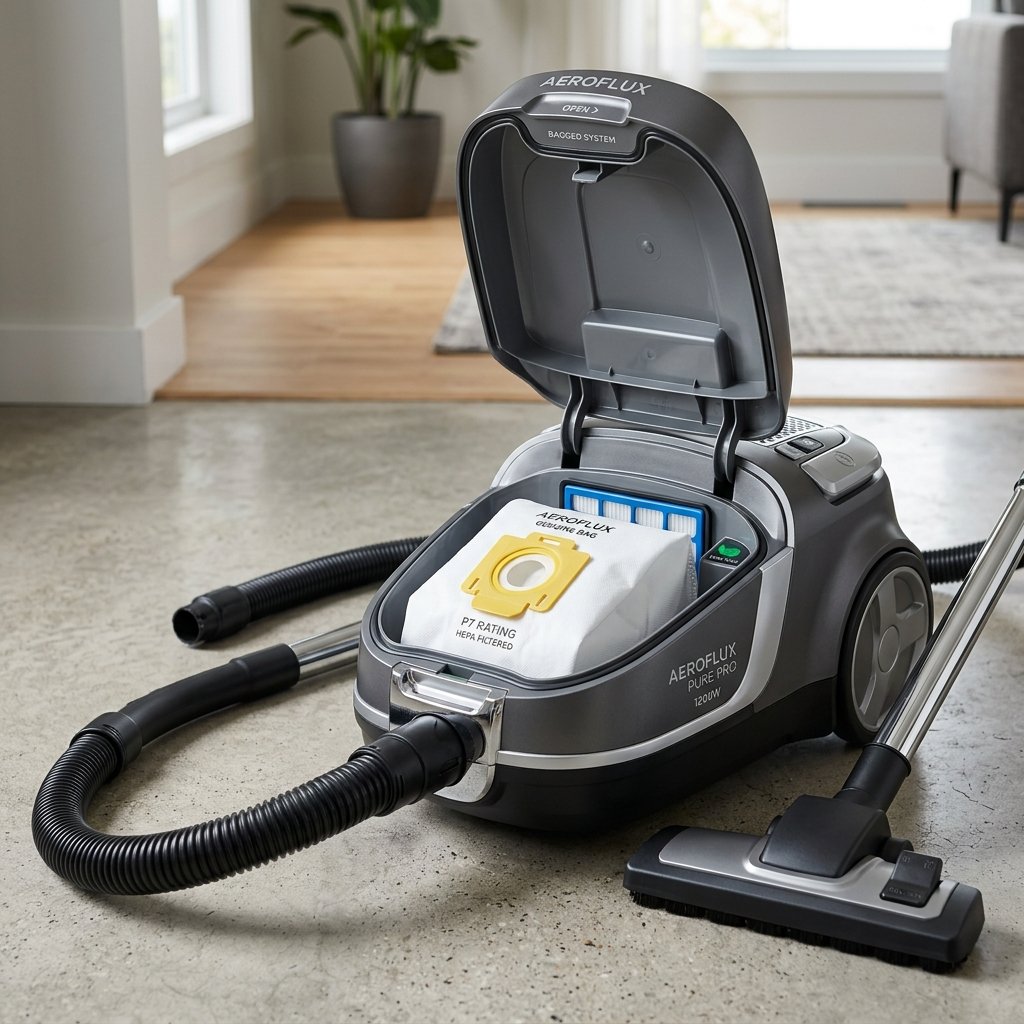
Bagged and bagless vacuums both clean effectively, but they differ meaningfully in hygiene, running costs and day-to-day convenience. Here’s how to decide which suits your household.
Quick Answer
Bagless vacuums cost less to run long-term and let you see when the bin needs emptying, but expose you to a small dust cloud on disposal. Bagged vacuums cost more per year in replacement bags but offer more hygienic, sealed disposal — a meaningful advantage for allergy sufferers.
How Bagless Vacuums Work
Bagless vacuums use a cyclonic or filter-based system to separate dirt from air into a clear or opaque bin, which you empty directly into the household bin. There’s no ongoing bag cost, and you can see exactly how full the bin is at a glance. The trade-off is that emptying releases a small amount of fine dust into the air, which can be a genuine issue for people with allergies or asthma.
How Bagged Vacuums Work
Bagged vacuums capture debris inside a sealed paper or fabric bag, which you remove and dispose of as a self-contained unit once full. This is more hygienic, since dust never re-enters the room during disposal, and bags also act as an additional filtration layer. The downside is an ongoing cost — bags typically cost a few dollars each and need replacing every few weeks in an active household.
Comparison Table
| Factor | Bagless | Bagged |
|---|---|---|
| Ongoing cost | Lower (no bags) | Higher (regular bag purchases) |
| Hygiene on disposal | Releases some dust | Sealed, more hygienic |
| Capacity visibility | Easy to see fill level | Requires checking bag weight/indicator |
| Best for | General households, cost-conscious buyers | Allergy sufferers, hygiene-focused households |
| Filtration | Relies on separate filter stages | Bag itself adds filtration |
Which Should You Choose?
If long-term running costs matter most and no one in your household has significant allergies, bagless is generally the more economical choice. If allergy or asthma symptoms are a concern, or you simply prefer not to handle loose dust during disposal, bagged is worth the extra ongoing cost.
Final Thoughts
Neither format is universally better — the right choice depends on whether ongoing cost or hygiene during disposal matters more to your household.
Comparing specific bagged and bagless models? See our How to Choose the Best Vacuum Cleaner in Australia guide.
Key Takeaways
Bagless is cheaper to run but exposes you to some dust on disposal.
Bagged offers more hygienic, sealed disposal — a real benefit for allergy sufferers.
Choose based on your household’s health needs and tolerance for ongoing bag costs.
Frequently Asked Questions
Bagged vacuums are generally better for allergy sufferers since the bag is sealed and disposed of without releasing trapped dust back into the air.
Yes, since there’s no ongoing cost for replacement bags, though filters still need periodic cleaning or replacement.
Typically every few weeks in an active household, depending on bag size and how much the vacuum is used.
Not inherently, but bagless bins need more frequent emptying to maintain consistent suction, since performance drops as they fill.
Compatibility varies by brand and model, so check specifications carefully, as some proprietary bag shapes aren’t interchangeable.
For allergy or asthma sufferers, yes — emptying a bagless bin can release a noticeable amount of fine dust into the air.
Bagless avoids ongoing bag waste, though some argue sealed bag disposal reduces airborne allergen exposure, which is its own environmental health consideration.
The bag itself acts as an additional filtration layer, which can improve overall filtration in bagged models.
Really useful breakdown — this matched what I found testing a couple of models myself. Appreciate the Australian-specific detail.
Would love an update once the newer models land locally, but this gave me enough to make a confident decision.